As Bennett points out in his “Developmental Model of Intercultural Sensitivity” (DMIS), the stage of minimizing cultural difference, minimization, is a stage of ethnocentrism, seeing and approaching the world, and different others, from our cultural point of view.
 I love Covey’s Seven Habits of Highly Effective People. I find them personally helpful, and have used them in training and consulting others. I assumed, when I first began trying to apply them to my own life and others’ lives, that they were “universal” (yes, I know, as an anthropologist I should not have fallen into that trap for even a moment). I was brought up short, however, when I began evaluating the lives of Egyptians around me, with Covey’s habits.
 Covey’s second habit is to “Begin with the end in mind,” to beware of begin caught in the trap of activity, being busy but not “effective.” His third habit, following from this, is to “Put first things first.” Once you know what your vision is, you need to make decisions to align your activities with what you are aiming at in life. You should have priorities, and organize your life around them. You should have a “burning ‘yes!’” that allows you to say “no” to other things. You should focus on things which are important but not urgent (things which all too often are neglected), and avoid living your life by the “tyranny of the urgent” (especially, things which are urgent to others). Your big priorities should be reflected in goal-setting and planning, down to the daily level.
 As I said, I love Covey’s habits, and find them personally helpful. But I began to reflect on the fact that most of the Egyptians I knew, did not seem to live by these habits. My Egyptian friends seemed always to be busy, running from one thing to the next, burning the candle on both ends. They always seemed to be “juggling” too many things, and “dropping” one or another of the “balls” they were juggling (e.g., friends would routinely miss scheduled appointments or activities because of something that came up, which “interruptions” were often in the form of family obligations). And most of the Egyptians I knew always seemed to say “yes” to everyone and everything that was asked of them, regardless of whether their schedules already seemed to be full. And talk about the “tyranny of the urgent”! From my perspective, the lives of my Egyptian friends definitely seemed to be tyrannized by other people’s urgencies (which, to my pride, I tended to avoid by saying “no” to people – which I have to admit, hurt the depth of my relationship with Egyptians; but that’s another story). I kept thinking, “you need to say ‘no,’ you need to prioritize, you need to get your schedules and activities under control.”
One way in which I discovered the workings of minimization occurred during the years I lived and worked in Egypt
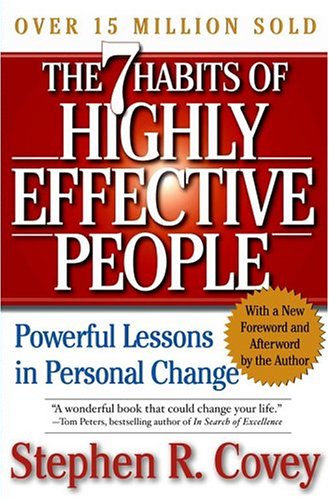 I love Covey’s Seven Habits of Highly Effective People. I find them personally helpful, and have used them in training and consulting others. I assumed, when I first began trying to apply them to my own life and others’ lives, that they were “universal” (yes, I know, as an anthropologist I should not have fallen into that trap for even a moment). I was brought up short, however, when I began evaluating the lives of Egyptians around me, with Covey’s habits.
 Covey’s second habit is to “Begin with the end in mind,” to beware of begin caught in the trap of activity, being busy but not “effective.” His third habit, following from this, is to “Put first things first.” Once you know what your vision is, you need to make decisions to align your activities with what you are aiming at in life. You should have priorities, and organize your life around them. You should have a “burning ‘yes!’” that allows you to say “no” to other things. You should focus on things which are important but not urgent (things which all too often are neglected), and avoid living your life by the “tyranny of the urgent” (especially, things which are urgent to others). Your big priorities should be reflected in goal-setting and planning, down to the daily level.
 As I said, I love Covey’s habits, and find them personally helpful. But I began to reflect on the fact that most of the Egyptians I knew, did not seem to live by these habits. My Egyptian friends seemed always to be busy, running from one thing to the next, burning the candle on both ends. They always seemed to be “juggling” too many things, and “dropping” one or another of the “balls” they were juggling (e.g., friends would routinely miss scheduled appointments or activities because of something that came up, which “interruptions” were often in the form of family obligations). And most of the Egyptians I knew always seemed to say “yes” to everyone and everything that was asked of them, regardless of whether their schedules already seemed to be full. And talk about the “tyranny of the urgent”! From my perspective, the lives of my Egyptian friends definitely seemed to be tyrannized by other people’s urgencies (which, to my pride, I tended to avoid by saying “no” to people – which I have to admit, hurt the depth of my relationship with Egyptians; but that’s another story). I kept thinking, “you need to say ‘no,’ you need to prioritize, you need to get your schedules and activities under control.”
And then one day the thought occurred to me, “what if the ‘Seven habits of highly effective Egyptians’ are different?” One of the things which caused me to ask this question was the reflection that many of my Egyptian friends were leaders (in groups and organizations, etc.). And many of them seemed to be “effective” – e.g., they had an impact on others, and they were doing things which were making a difference in peoples’ lives and in the society.
And then I began reflecting on the fact that Egyptian culture is “collective” (vs. the radical individualism of most western culture); that it is definitely people oriented (rather than the more western task orientation); and that it is event oriented (rather than the western tendency toward time orientation). Thus, for example, Egyptians tend to not be able to “just say ‘no’” to people they are in close relationship with (which is a large number of family and friends and associates, as Egyptians typically have very large social networks); and life takes more time, too, as you don’t just drop something that’s happening for something else you have scheduled, and when a person you have relationship with happens across your path, you don’t do the western thing of “I’m sorry, I have a meeting…” – rather, you allow the interruption to throw you off course, and figure out ways to deal with the impact on the rest of your schedule as you go along.
So what are the “Habits of highly effective Egyptians”? Sorry, I haven’t figured that one out yet. It’s probably for an Egyptian to write, not an outsider. But as I reflected on the fact that effectiveness is defined within a cultural context, I began to look for clues and talk with Egyptians about how they see effectiveness and make decisions, etc., rather than trying to force them into Covey’s mold (or mine). And I learned a lesson about being wary of generalizing and universalizing “principles” and practices, no matter how successful and proven they seem to be in one particular context. (A corollary is that for an outsider to be anything remotely near “effective” in a different cultural context, s/he must undergo a significant personal adaptation. But that’s another story.)

