Showing posts with label minimization. Show all posts

Sunday, January 7, 2018

Culture quote: Self-knowledge on the boundary

“Who knows one culture, knows no culture. We come to self knowledge on the boundary” – David Augsburger

In IDC terms, the two major ways we have of relating to others / other cultures are from an “ethnocentric” stance, and from a “global” or “ethnorelative” stance. Knowing one culture, in the Augsburger quote, is being ethnocentric – I know the world as I know it (as my people know it), and don’t realize that there are other ways of seeing things. On an individual level, it is equivalent to just knowing how I experience the world – for example, being an “extrovert” but not realizing that that is one way of being, that there are other people who are “introverts.”

Stephen Covey says that without self-awareness it is impossible to know other people as they are, because I relate to others as if they were me. Therefore, self-awareness and other-awareness, or realizing that there are different ways of being human, go hand in hand. To refer to the extrovert / introvert example, if I am an extrovert but unaware of the existence / reality of introverts, I may simply judge others who are introverts as being rude or unfriendly (by my standards, which are the only ones I possess). The knowledge that others are different, that there are other ways of being, comes “on the boundary” (of otherness), as Augsburger says – and once I come to understand that introvertedness is another way of being, I can know both myself and others more deeply.

The same is true of knowledge of other cultures / people in their cultural context. According to the IDC, Minimization is a transitional phase between “ethnocentrism” and a “global mindset.” One of the keys to growing out of ethnocentrism (through Minimization and into Acceptance and Adaptation) is a combination of self-knowledge and other-knowledge, which comes “on the boundary” between myself / my group and others, as I learn that there are different ways of being human – that some peoples, for example, see themselves not as free-standing individuals, but as part of a group, with the group having the right to speak into the lives of individuals and guide decisions, etc. (e.g., who they marry, where they live, etc. - this is known by interculturalists as a “collectivist” way of living out the relationship between individuals and their group).

The only way to gain awareness of my own culture (and of the fact that I am an encultured human being) is to go to the boundaries of others, and encounter them.  So if you are looking for growing self-awareness, step out. Or, to look at things from a different angle, if you travel and engage others in their cultural settings, realize that the “strangeness” you run into is not an indication that those others need to “get their act together” (i.e., become more like you, in how they drive or organize their society or approach time and appointments, etc.), but rather that you have encountered a different way of being human; and this represents a great opportunity to learn not just about those “strange” others, but about yourself as well.


Thursday, January 4, 2018

Working to overcome polarization

What can we do to work against and overcome polarization? In IDC terms, the next stage after Polarization is Minimization, which is characterized by focusing more on what we have in common with others than on the differences. This essentially represents a less negative experience of difference, as we discover the “common humanity” of those who differ from us. In our study abroad program (in the Middle East, in an Arab Muslim majority setting), this happens as our Christian, mostly anglo American and Canadian students begin meeting and relating to Arabs, Muslims, Jews, Palestinians, and others (these categories obviously have some overlap with each other).

Our students meet people in different contexts – we have local people come in as speakers, talking about various aspects of Islam, local culture, politics, social issues, etc.; we arrange meetings with local young people, with both organized and informal interaction, and hanging out talking and getting to know each other; we do homestays with local families, during which our students have the opportunity to experience something of daily life with “regular” people; our students have the opportunity to observe prayer in a mosque as well as to attend a church service in Arabic; and of course there is the daily opportunity to interact with people on the streets, in shops, taking taxis, hanging in coffee shops, etc.

These opportunities, with a focus on learning and understanding – through interaction, asking questions, listening carefully – are at the heart of our students’ experience of “humanizing” the very different “others” they meet on their sojourn in the Middle East. These relational opportunities are transformational – as we “draw near” to others who are different than we are, they become “real” to us, comprehensible, relatable. We may not “agree” with them (about one thing or another – views of God, or of politics, or whatever), but we can understand and appreciate (beyond Minimization, this is a move into Acceptance – i.e., accepting others as the real and equally human beings that they are, different from ourselves but equally worthy of respect, understanding, etc.).

This is very difficult and challenging, and requires great intentionality and effort. We don’t “naturally” seek out relationship with those who are different from us, and especially not with those with whom we are polarizing. But the question is, do we want to overcome polarization? Do we want to learn to get along with, to live positively with, those who are different than we are?

If we do want this, the way forward is somewhat “simple” (though admittedly difficult) – we can work to overcome polarizing over difference by seeking relationship with those who are different than we are (here’s a life principle for you: the harder it is for you to understand an individual or a group, the more you need to pursue this approach with that individual or group). Seeking relationship involves seeking understanding, to enter in to the world of the other, their values, perspectives, etc. And this is the path of humanizing others, and coming to experience them much more positively.

Do you see the problem (of polarization)? Would you like to experience difference (and those who most frustrate you) more positively? Are you up for the challenge? It’s doable…consider finding someone “different,” whose views and perspectives you disagree with / don’t understand, and simply saying, “could we talk? I’d like to get to know you, and to understand your views of (/values in regard to)…”


Saturday, April 30, 2011

Culture Quote of the Day - the danger of assuming relevance

“There are probably levels of ethnocentrism, moving from the narrow collectivism of my family, my village, to my clan, my state, my country or my race. There may be dozens of ever-expanding circles as the ripples in the pond expand outward.”

“...the ethnocentric leader has limitations. As pastors and missionaries reach out to the rest of the world, they will do so from the perspective of the leadership values of their own culture and assume that what they have learned about successful churches will apply to all cultures. This attitude can cause tensions with global church-to-church partnerships. Because of their limited perspectives, crosscultural workers assume that their cultural values are biblical and universal. The ethnocentric pastor of a megachurch in one culture will assume that the principles of success in his or her church are effective in any culture.”
James E. Plueddemann, Leading Across Cultures

In Bennett's terms, what Plueddemann is identifying as the problem of ethnocentric religious leadership is located in the last of three ethnocentric phases in the DMIS model, minimization (see http://contextualliving.blogspot.com/2011/03/how-ethnocentrism-hinders-love-of.html). This seems to be a significant problem for people of faith, because in attempting to be true to God and the Scriptures, we can easily wrap up what is assumed to be "absolute" and "eternal" (i.e., from God) with our cultural ways and perspectives.

The question is, can we escape our ethnocentrism, move on to a different way of understanding and interacting with cultural difference, that will enable us to relate more positively, more effectively, with peoples of other cultures? 

Thursday, March 24, 2011

What’s Wrong with Ethnocentrism?

To return once more to the topic of ethnocentrism (i.e., seeing and experiencing and interacting with the world from the perspective of your own culture / your own frame of reference, without an understanding of the different cultures of others, or the ability to enter into their frame of reference and experience), I would like to ask whether ethnocentrism is compatible with faith, and if not, what’s wrong with it?

Here are some of the characteristics of ethnocentrism, with reference to the stages of Bennett’s “Developmental Model of Intercultural Sensitivity”*:

(Denial)
  • lack of awareness of cultural difference
  • lack of interest in cultural difference
  • inability to distinguish cultural difference (e.g., thinking of “Africans” or “Asians” or even “foreigners” as a broad category without internal differentiation)
  • isolation or intentional separation from different others
(Defense)
  • lack of understanding of cultural difference or others who are different
  • a negative experience of difference, and reaction against it – feeling threatened by difference
  • one’s own culture experienced as the only viable one
  • polarization (“us” / “them”)
  • generalizing and positively stereotyping one’s own people and culture
  • generalizing and negatively stereotyping other peoples and cultures
  • prejudice, denigration, possibly animosity, toward those who are different
  • in the extreme, dehumanizing and/or demonizing others
(Minimization)
  • trivializing difference, acting as if people are basically the same (i.e., as if others are basically the same as ourselves)
  • thus, not relating to others as they truly are, in their uniqueness or fullness
  • lack of cultural self-awareness
  • generalizing from one’s own experience, principles, practices, to others – assuming that what “works for us” is universal, relevant and applicable anywhere and everywhere and to everyone
  • those in a dominant or majority group not being aware of how racial minorities experience race relations, men not being aware of how women experience gender issues, etc.
  • assuming we have “the answers” for everyone, not being aware that the questions that others are asking, may be different than our questions
In sum, ethnocentrism is a form of self-centeredness, on a group and cultural level. It ranges from ignorance through defensiveness to a somewhat benign assumption of similarity, but in all cases, one cannot know and relate to others as they are, from any point on the spectrum of ethnocentrism.

There are many reasons why someone might decide that it would be best not to stay in an ethnocentric state.

From a faith perspective, I would argue that ethnocentrism, while “natural” to people, is not compatible with living according to the example and teachings of Jesus.

Take Jesus’ central teachings, to “love our neighbor as ourselves,” and to “do unto others as you would have them do unto you.” As a starting point, it would seem that these commands would necessitate having an interest in knowing others and relating to them. And both “loving” and “doing unto others” would seem to clearly imply not looking down on them, negatively stereotyping, being biased against, or despising them. Thus, it seems obvious from the beginning that the “denial” and “defense” stages of ethnocentrism do not square with Jesus’ teaching.

To go deeper, in the broader context of the teachings of the New Testament one might define love as encompassing many other relational teachings, e.g., the exhortations to accept one another and to honor one another. To take just those two, it would seem obvious that a depth of accepting and honoring another person requires knowing that person as they are. The more fully I know someone, the more deeply I will be able to (learn to) accept or honor them. And this would be true of the “do unto others” command, which is really a way of summarizing what it means to love someone – what I want of others is that they understand me as I am, and accept and otherwise relate to me as I am, not according to an inadequate or distorted image of me.

It doesn’t take much empathy to imagine that for a person of color, having a white person treat you as if you are the same as them, without any understanding of your personal or group experience of discrimination, etc., is not loving (or even tolerable); or for a woman, to have men blithely proclaim that “we have no problem with gender issues here,” without ever listening to your experience or perspective on the matter, falls short of a positive or even acceptable relationship (to say the least). And anyone who has been on the receiving end of some other person or group coming in with the (“universal”) answers to what they perceive to be your need or problem, knows how obnoxious that approach is. Therefore, “minimization” also falls short of relating well to other people, and thus, to living according to the teachings and example of Jesus.

Ethnocentrism, in one way or another, in one form or another, is at the heart of many of the problems which exist between groups of people in the world today (and throughout history). It seems clear to me, as a follower of Jesus, that living up to the ideals and standards of our faith should lead us to reject, and seek to identify and grow beyond, ethnocentrism in all of its manifestations.

Coming soon: Beyond Ethnocentrism…


* For more details on each of these stages, see:

For full treatment of Bennett’s model, see
Bennett, Milton J., “Towards Ethnorelativism: A Developmental Model of Intercultural Sensitivity.” In Paige, R.M. (Ed). (1993) Education for the Intercultural Experience (2nd ed., p. 21-71). Yarmouth, ME: Intercultural Press.

Bennett, Milton J., “Becoming Interculturally Competent.”  In Wurzel, Jaime S., ed., Toward multiculturalism: A reader in multicultural education (2nd ed., pp. 62-77). Newton, MA: Intercultural Resource Corporation, 2004.

Tuesday, March 1, 2011

How ethnocentrism hinders love of neighbor(part III) - minimizing difference


Ethnocentrism, stage three: Minimization

The third stage in Bennett’s model of intercultural sensitivity (the DMIS)* is minimization, about which he comments, “The last attempt to preserve the centrality of one’s own worldview involves an effort to bury difference under the weight of cultural similarities.”

Minimization is the most “tricky” of the stages of ethnocentrism, and perhaps the most difficult, even dangerous, in that it is hard to recognize, it seems on the surface to be positive and nice, and it is possible to function at what seems a good level of interaction with people of other cultures, at this phase.

In minimization, people move beyond the polarization of the defense stage (see http://contextualliving.blogspot.com/2011/02/how-ethnocentrism-hinders-love-of.html), to a more positive experience of cultural difference. At this stage, cultural difference is overtly acknowledged while not being negatively evaluated. Rather, difference is trivialized by being subsumed under perceived similarity.

“In minimization, human similarity seems more profound than cultural difference, and so we can stand on the common ground of our shared humanity and put aside our differences.”

Minimization is alluring, because of its perceived sensitivity. Bennett is fond of pointing out that people in minimization tend to think of themselves as living by the “Golden Rule,” to “do unto others as you want them to do unto you” (what could be more loving than that?) – but then he points out the limitations of that approach in relating to different others.
      
Is the "Golden Rule" enough when we're dealing with significant cultural difference?

One characteristic of people who are in the minimization stage of dealing with difference is that they have a tendency to think they can just "be themselves" when they travel or enter a different cultural setting, and things will be fine.

Minimization is certainly more pleasant to experience than defense. It is the difference between having a taxi driver ask me to get out of his taxi, in the Middle East, upon hearing that I am an American, versus a taxi driver saying, “that’s okay, it doesn’t matter what your nationality is – we’re all ‘children of Adam’.”

The problem with minimization, though, and why it belongs as a stage of ethnocentrism, is that when I treat people who are culturally different than I am, as if they were not, I am treating them as if they were me, part of my culture. When I “do unto others as I would have them to do unto me,” I fall short of treating them as the unique (and different than me) people that they are.

This is especially problematic with people who are part of a majority or dominant group (in a society or in an organization). Those in the dominant group tend to project their own culture on others, and not see (or experience) significant difference that exists. It has become axiomatic for me that if you want to know how race relations are in a group, you have to ask someone in the minority, not in the dominant group (who will tend to think that “we have no problem with that here”). If you want to know how things are in the area of gender issues, you have to ask women, not men. If you want to know how cultural sensitivity is going in a multicultural group, again, you have to ask those from one of the minority cultures represented.

In the individual realm, we might see minimization in an example of the so-called “love languages.” If I try to love my wife the way that I like her to show love to me, it generally doesn’t work out that well, because she isn’t me. In another realm, if I try to show someone respect by acting in the way that I like others to show me respect, again, it doesn’t tend to hit home for them. Or in yet another area, for me as a strong T (thinker) on the Myers-Briggs (MBTI) to relate well to a friend who is a strong F (feeler), I cannot assume that we are the same (which ends up with me thinking of him as a T, the way that is natural to me).

Bennett talks about two different kinds of minimization, one centered on what he calls physical universalism, and another on what he calls transcendent universalism. The former emphasizes physical needs, e.g., that “all people must eat, procreate, and die.” The latter “suggests that all human beings, whether they know it or not, are products of some single transcendent principle, law, or imperative,” which may be described in religious, economic, political, psychological or other terms. In all cases, cultural differences are ignored, subsumed under dynamics or realities which supposedly trump or neutralize the cultural dimension.

It is easy to find examples of minimization at work, when you know what to look for. They include the confidence with which a group of people leave their own cultural or national context, certain that they have “universal principles” that will work for anyone, anywhere – whether those principles and practices be in leadership, church organization and life, economic development, education, government, politics, or any other area. Americans are obviously adept at this. But the reaction of the rest of the world to those who go abroad with this confidence, is one indication that the values, principles, practices, etc., are not as universal as their proponents assume.

One of the problems with minimization is that people seem sensitive and nice, and can go a long way acting on the assumption of similarity. But the limits of minimization are significant. Think, for example, of the long history of failed aid and development projects. Or consider the reaction of the Arab and Muslim world to the U.S. attempt to export democracy, American style (most Americans still don’t “get” that anyone would have a problem with that). I discovered the limits of minimization when I tried to evaluate Egyptian friends by Covey’s 7 Habits (see http://contextualliving.blogspot.com/2011/02/are-coveys-7-habits-universal.html), or when I attended a Maxwell conference on leadership at an Egyptian church, and tried to imagine what a group of Egyptian leaders were learning from presenters who were parochially American in their language and their examples (had they ever travelled abroad?).

So how does minimization hinder love of neighbor?

Are we all the same?
Minimization is a better place to be than denial or defense, in moving toward love of neighbor. In minimization, there is what I would think of as a semblance of love of neighbor, at least on the surface of things.  Attempting to “do unto others as I would have them do unto me” is a noble goal, but if we are ethnocentric, we will not be able to fulfill this, because we will be treating them as if they were the same as us. Jesus’ command to love can be seen to be worked out in various ways that the Bible instructs people to relate to one another – e.g., to honor or respect one another, to accept one another, to comfort one another, etc. It can be easily shown, however, that the way people prefer to be shown honor, or acceptance, or comfort, differs significantly from person to person (and even more so, from culture to culture). Thus, to treat others as if they were the same as ourselves, is not to (fully) love them.

When we minimize difference, we cannot really know people as they are, and we cannot therefore attain the depth of genuine relationship that is necessary to truly love others. Beyond that, if we interact with different others according to some kind of transcendent universalism, we are probably guilty of trying to fit them into our mold (with the extreme, as Bennett points out, being “aggressive conversion activities”). For us to love our neighbor as they are, not as we would like them to be (i.e., like us), there has to be a level of understanding of and respect for difference, that is not found at the stage of minimization.

And whenever there is “baggage” in the history between groups, or tension, or open conflict, minimization definitely does not work well. Imagine trying to practice love of neighbor between women and men, whites and blacks, Muslims and Christians, or Palestinians and Israelis – on the assumption that the similarities are greater than the differences, that we’re “all basically the same.”

We cannot minimize cultural difference, and love our neighbor. We cannot project ourselves on others, treat others as if they were us, and love our neighbor. We cannot arrogantly assume that what “works” for us, is right for others around us, and that they should do things “our way,” and be loving our neighbor.

We cannot stay in minimization, and truly, deeply love our neighbor. We must go deeper, we must press on to a different way of experiencing difference, which Bennett refers to as ethnorelativism.

(To be continued...)


*For full treatment of Bennett’s model, see
Bennett, Milton J., “Towards Ethnorelativism: A Developmental Model of Intercultural Sensitivity.” In Paige, R.M. (Ed). (1993) Education for the Intercultural Experience (2nd ed., p. 21-71). Yarmouth, ME: Intercultural Press.

Bennett, Milton J., “Becoming Interculturally Competent.”  In Wurzel, Jaime S., ed., Toward multiculturalism: A reader in multicultural education (2nd ed., pp. 62-77). Newton, MA: Intercultural Resource Corporation, 2004.


Saturday, February 26, 2011

Are Covey’s 7 Habits universal? - the dangers of "minimization"

As Bennett points out in his “Developmental Model of Intercultural Sensitivity” (DMIS), the stage of minimizing cultural difference, minimization, is a stage of ethnocentrism, seeing and approaching the world, and different others, from our cultural point of view.

One way in which I discovered the workings of minimization occurred during the years I lived and worked in Egypt.  

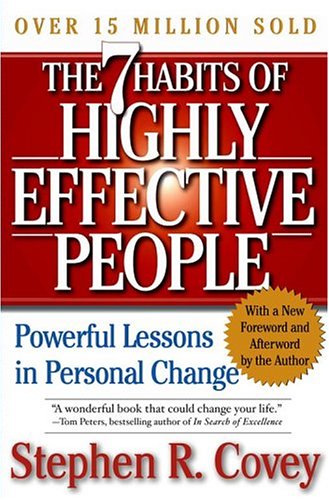
I love Covey’s Seven Habits of Highly Effective People. I find them personally helpful, and have used them in training and consulting others. I assumed, when I first began trying to apply them to my own life and others’ lives, that they were “universal” (yes, I know, as an anthropologist I should not have fallen into that trap for even a moment). I was brought up short, however, when I began evaluating the lives of Egyptians around me, with Covey’s habits.

Covey’s second habit is to “Begin with the end in mind,” to beware of begin caught in the trap of activity, being busy but not “effective.” His third habit, following from this, is to “Put first things first.” Once you know what your vision is, you need to make decisions to align your activities with what you are aiming at in life. You should have priorities, and organize your life around them. You should have a “burning ‘yes!’” that allows you to say “no” to other things. You should focus on things which are important but not urgent (things which all too often are neglected), and avoid living your life by the “tyranny of the urgent” (especially, things which are urgent to others). Your big priorities should be reflected in goal-setting and planning, down to the daily level.

As I said, I love Covey’s habits, and find them personally helpful. But I began to reflect on the fact that most of the Egyptians I knew, did not seem to live by these habits. My Egyptian friends seemed always to be busy, running from one thing to the next, burning the candle on both ends. They always seemed to be “juggling” too many things, and “dropping” one or another of the “balls” they were juggling (e.g., friends would routinely miss scheduled appointments or activities because of something that came up, which “interruptions” were often in the form of family obligations). And most of the Egyptians I knew always seemed to say “yes” to everyone and everything that was asked of them, regardless of whether their schedules already seemed to be full. And talk about the “tyranny of the urgent”! From my perspective, the lives of my Egyptian friends definitely seemed to be tyrannized by other people’s urgencies (which, to my pride, I tended to avoid by saying “no” to people – which I have to admit, hurt the depth of my relationship with Egyptians; but that’s another story). I kept thinking, “you need to say ‘no,’ you need to prioritize, you need to get your schedules and activities under control.”
And then one day the thought occurred to me, “what if the ‘Seven habits of highly effective Egyptians’ are different?” One of the things which caused me to ask this question was the reflection that many of my Egyptian friends were leaders (in groups and organizations, etc.). And many of them seemed to be “effective” – e.g., they had an impact on others, and they were doing things which were making a difference in peoples’ lives and in the society.

And then I began reflecting on the fact that Egyptian culture is “collective” (vs. the radical individualism of most western culture); that it is definitely people oriented (rather than the more western task orientation); and that it is event oriented (rather than the western tendency toward time orientation). Thus, for example, Egyptians tend to not be able to “just say ‘no’” to people they are in close relationship with (which is a large number of family and friends and associates, as Egyptians typically have very large social networks); and life takes more time, too, as you don’t just drop something that’s happening for something else you have scheduled, and when a person you have relationship with happens across your path, you don’t do the western thing of “I’m sorry, I have a meeting…” – rather, you allow the interruption to throw you off course, and figure out ways to deal with the impact on the rest of your schedule as you go along.

So what are the “Habits of highly effective Egyptians”? Sorry, I haven’t figured that one out yet. It’s probably for an Egyptian to write, not an outsider. But as I reflected on the fact that effectiveness is defined within a cultural context, I began to look for clues and talk with Egyptians about how they see effectiveness and make decisions, etc., rather than trying to force them into Covey’s mold (or mine). And I learned a lesson about being wary of generalizing and universalizing “principles” and practices, no matter how successful and proven they seem to be in one particular context.  (A corollary is that for an outsider to be anything remotely near “effective” in a different cultural context, s/he must undergo a significant personal adaptation. But that’s another story.)