Showing posts with label Bennett's "Developmental Model of Intercultural Sensitivity" (DMIS). Show all posts

Sunday, May 15, 2011

Beyond Ethnocentrism (2) – Adapting to Cultural Difference

“One of the ways people inevitably increase their awareness when learning about other cultures is to move from thinking ‘My way is the only way’ toward thinking ‘There are many valid ways’ of interpreting and participating in life. And the process involves more than changing your thinking; it also involves adjusting your behaviors.”
Brooks Peterson, Cultural Intelligence (emphasis mine)

“The essence of ethnorelativism is respect for the integrity of cultures, including one’s own. In acceptance, the framework for appreciating cultural difference was established. At this stage, adaptation, skills for relating to and communicating with people of other cultures are enhanced.”
Milton Bennett, Towards Ethnorelativism (emphasis mine)

As we spend more time living and interacting with people in another cultural context, we may experience growth from Acceptance into Bennett’s next phase of intercultural sensitivity, Adaptation.


Acceptance (the previous phase) may have to do mainly with a change in perspective and attitude toward cultural difference (seeing it more positively, realizing it is there, being curious about and respectful toward difference), with an initial behavioral dimension of taking action to discover, understand, and learn about difference. It is possible to grow in accepting cultural difference, without living deeply or constantly in the midst of difference.

To grow into the phase of Adaptation, though, we need to be living in the context of cultural difference, and developing the skills for effective adjustment. This adjustment is comprehensive, involving cognitive, affective, and behavioral change over time. Cognitively, one begins to understand and see the world from the perspective of the people in the other culture. Behaviorally, one learns to adapt to do things in a way that is appropriate in the other setting. Affectively, one’s emotions are impacted over time, as feelings associated with the new worldview and cultural practices, and the value judgments associated with them, are internalized.

For example, through our years in Tunisia, we learned how Tunisians do hospitality. When someone you know shows up at your door, you don’t stand and talk with them at the door (unless you are male and the visitor is female, or vice versa, and no one of the other gender is at home with you), but welcome the visitor in (to stand and talk in the doorway implies you don’t want the visitor in your home). You must serve something, at least something to drink, and probably at least some kind of snack, if not a meal. You do not ask, “would you like…?” because such a request will be politely refused. Rather, you simply bring out the drink(s) and food, and serve them up. If you are eating a meal, you insist your visitor join you. If it is near a meal time, you plan on the visitor staying and eating with you (and insist that they do). In the Tunisian setting, rather than “a man’s home is his castle,” the guiding motto is, “my home is your home.” Rather than the honored one being the guest being received, in Tunisia, it is the host who is honored by the visit (hosts will say to visitors, “we have been visited by blessing”). A different way of viewing the world, people, social interactions, hospitality…

After living for years in Tunisia, and adapting to the Tunisian way of doing hospitality, we were often (emotionally) uncomfortable in hospitality situations in the U.S. For example, we were at my family’s eating one evening, and a couple of visitors dropped by unexpectedly. They were invited in (they were a sister-in-law and her friend; if they had been less close, perhaps they would not have been invited in), but we sat and continued eating, while talking with them. No one even offered for them to join us. (The expectation, in the U.S. setting, was that they had “interrupted” us in our plan or schedule, and would not have expected plans to be adjusted for them.) The fact that we felt uncomfortable shows that we experience adaptation even at the affective level, over time.

Note that adaptation, in Bennett’s model, is not assimilation. You don’t give up your culture, but experience an extension of your cultural repertoire.

“In adaptation, new skills appropriate to a different worldview are acquired in an additive process. Maintenance of one’s original worldview is encouraged, so the adaptations necessary for effective communication in other cultures extend, rather than replace, one’s native skills. The key to this additive principle is the assumption that culture is a process, not a thing. One does not have culture; one engages in it.”

One of the key skills in Adaptation is the ability to “look through the others’ eyes,” to construct reality that is nearer to their reality. Bennett contrasts this “empathy,” with the “sympathy” of ethnocentrism.

Can we adapt to the different other?

“…I have contrasted empathy to ‘sympathy,’ where one attempts to understand another by imagining how one would feel in another’s position. Sympathy is ethnocentric in that its practice demands only a shift in assumed circumstance (position), not a shift in the frame of reference one brings to that circumstance; it is based on an assumption of similarity, implying other people will feel similar to one in similar circumstances. Empathy, by contrast, describes an attempt to understand by imagining or comprehending the other’s perspective. Empathy is ethnorelative in that it demands a shift in frame of reference; it is based on an assumption of difference, and implies respect for that difference and a readiness to give up temporarily one’s own worldview in order to imaginatively participate in the other’s.”

Adaptation takes time. And it changes us. As we live in another cultural setting, and adapt to the behavior, worldview, and even the value judgments and emotions accompanying sociocultural experience, we change. Even though this is not a process of assimilation, of exchanging our culture for the other, we become different people through the process. One author has called such people, “150% people.” And Bennett talks of becoming “marginal,” in the sense of becoming a person who is not straightforwardly “at home” in any cultural setting. When I returned to Minnesota after years in Tunisia (which used to be “home” but now no longer seems to be – for us know, “home” is wherever we are living), I could recognize my native culture, but I felt as if I was seeing it through different eyes. And indeed, I was. I had not become Tunisian, but I was no longer Minnesotan in the way I had been.


Coming soon… Beyond Ethnocentrism (3): Integration


For full treatment of Bennett’s model, see
Bennett, Milton J., “Towards Ethnorelativism: A Developmental Model of Intercultural Sensitivity.” In Paige, R.M. (Ed). (1993) Education for the Intercultural Experience (2nd ed., p. 21-71). Yarmouth, ME: Intercultural Press.

Bennett, Milton J., “Becoming Interculturally Competent.”  In Wurzel, Jaime S., ed., Toward multiculturalism: A reader in multicultural education (2nd ed., pp. 62-77). Newton, MA: Intercultural Resource Corporation, 2004.

Wednesday, March 2, 2011

Does Bennett understand the Golden Rule?

In my previous post on the third stage of ethnocentrism, minimization, in Bennett's "Developmental Model of Intercultural Sensitivity," I briefly mentioned that Bennett sees the "Golden Rule" as somehow characterizing this phase (see http://contextualliving.blogspot.com/2011/03/how-ethnocentrism-hinders-love-of.html). (He goes on to say that what he calls the "Platinum Rule" is characteristic of moving into the ethnorelative stages of acceptance and adaptation, learning to "do unto others as they would have you do unto them" - but that's a discussion for a future post.)

The way Bennett discusses the "Golden Rule" may be problematic for people who are used to thinking of Jesus' words as a pinnacle of ethical teaching; and I suppose that some might on that basis reject Bennett as not knowing what he is talking about, if he would suppose that living by Jesus' "Golden Rule" is only a stepping stone toward a deeper and more positive way of relating to others.

Thus I raise the question, does Bennett understand the "Golden Rule"?

To quote Jesus' words,

"Therefore, whatever you want people to do for you, do the same for them, because this summarizes the Law and the Prophets." (Matthew 7:12)

I would argue that Bennett does not rightly characterize the essence of Jesus' teaching here. He does rightly point out that often (and in the stage of minimization in dealing with culturally different others), we ere by doing to others as if they were us, and thus falling short of treating them in the most fully loving way.

But Jesus' intent, I believe, is that our "doing to others as we want them to do for us" would imply, that we understand them and thus do to them as they want us to do to them - for this is what we would all want, is it not? I want people to understand me, to know me, to show me respect in the way that is meaningful to me, etc. And thus, to follow Jesus' teaching, I should seek to relate to others in the depth of knowing them as they are (and not projecting myself onto them, assuming that they are like me).

Thus, although I think Bennett misrepresents the heart of the Golden Rule, I believe his model (the DMIS) and teaching stands, and in fact resonates with, I would even say is built upon, the teaching of Jesus (though I don't think Bennett ever actually refers to Jesus).

My point here is that one can hold to Jesus' teaching as the pinnacle of ethical teaching, and embrace Bennett's model. For me, at least, they are compatible. And to "do unto others as I would have them do unto me" is to be led in the direction of ethnorelativism, growing in understanding and accepting others as they are.

Tuesday, March 1, 2011

How ethnocentrism hinders love of neighbor(part III) - minimizing difference


Ethnocentrism, stage three: Minimization

The third stage in Bennett’s model of intercultural sensitivity (the DMIS)* is minimization, about which he comments, “The last attempt to preserve the centrality of one’s own worldview involves an effort to bury difference under the weight of cultural similarities.”

Minimization is the most “tricky” of the stages of ethnocentrism, and perhaps the most difficult, even dangerous, in that it is hard to recognize, it seems on the surface to be positive and nice, and it is possible to function at what seems a good level of interaction with people of other cultures, at this phase.

In minimization, people move beyond the polarization of the defense stage (see http://contextualliving.blogspot.com/2011/02/how-ethnocentrism-hinders-love-of.html), to a more positive experience of cultural difference. At this stage, cultural difference is overtly acknowledged while not being negatively evaluated. Rather, difference is trivialized by being subsumed under perceived similarity.

“In minimization, human similarity seems more profound than cultural difference, and so we can stand on the common ground of our shared humanity and put aside our differences.”

Minimization is alluring, because of its perceived sensitivity. Bennett is fond of pointing out that people in minimization tend to think of themselves as living by the “Golden Rule,” to “do unto others as you want them to do unto you” (what could be more loving than that?) – but then he points out the limitations of that approach in relating to different others.
      
Is the "Golden Rule" enough when we're dealing with significant cultural difference?

One characteristic of people who are in the minimization stage of dealing with difference is that they have a tendency to think they can just "be themselves" when they travel or enter a different cultural setting, and things will be fine.

Minimization is certainly more pleasant to experience than defense. It is the difference between having a taxi driver ask me to get out of his taxi, in the Middle East, upon hearing that I am an American, versus a taxi driver saying, “that’s okay, it doesn’t matter what your nationality is – we’re all ‘children of Adam’.”

The problem with minimization, though, and why it belongs as a stage of ethnocentrism, is that when I treat people who are culturally different than I am, as if they were not, I am treating them as if they were me, part of my culture. When I “do unto others as I would have them to do unto me,” I fall short of treating them as the unique (and different than me) people that they are.

This is especially problematic with people who are part of a majority or dominant group (in a society or in an organization). Those in the dominant group tend to project their own culture on others, and not see (or experience) significant difference that exists. It has become axiomatic for me that if you want to know how race relations are in a group, you have to ask someone in the minority, not in the dominant group (who will tend to think that “we have no problem with that here”). If you want to know how things are in the area of gender issues, you have to ask women, not men. If you want to know how cultural sensitivity is going in a multicultural group, again, you have to ask those from one of the minority cultures represented.

In the individual realm, we might see minimization in an example of the so-called “love languages.” If I try to love my wife the way that I like her to show love to me, it generally doesn’t work out that well, because she isn’t me. In another realm, if I try to show someone respect by acting in the way that I like others to show me respect, again, it doesn’t tend to hit home for them. Or in yet another area, for me as a strong T (thinker) on the Myers-Briggs (MBTI) to relate well to a friend who is a strong F (feeler), I cannot assume that we are the same (which ends up with me thinking of him as a T, the way that is natural to me).

Bennett talks about two different kinds of minimization, one centered on what he calls physical universalism, and another on what he calls transcendent universalism. The former emphasizes physical needs, e.g., that “all people must eat, procreate, and die.” The latter “suggests that all human beings, whether they know it or not, are products of some single transcendent principle, law, or imperative,” which may be described in religious, economic, political, psychological or other terms. In all cases, cultural differences are ignored, subsumed under dynamics or realities which supposedly trump or neutralize the cultural dimension.

It is easy to find examples of minimization at work, when you know what to look for. They include the confidence with which a group of people leave their own cultural or national context, certain that they have “universal principles” that will work for anyone, anywhere – whether those principles and practices be in leadership, church organization and life, economic development, education, government, politics, or any other area. Americans are obviously adept at this. But the reaction of the rest of the world to those who go abroad with this confidence, is one indication that the values, principles, practices, etc., are not as universal as their proponents assume.

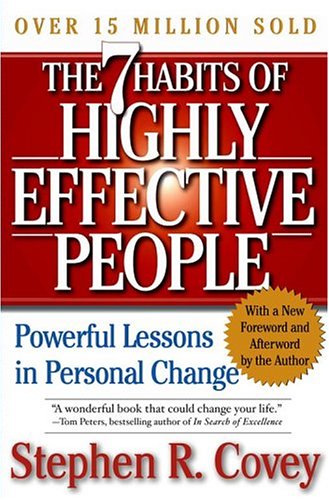
One of the problems with minimization is that people seem sensitive and nice, and can go a long way acting on the assumption of similarity. But the limits of minimization are significant. Think, for example, of the long history of failed aid and development projects. Or consider the reaction of the Arab and Muslim world to the U.S. attempt to export democracy, American style (most Americans still don’t “get” that anyone would have a problem with that). I discovered the limits of minimization when I tried to evaluate Egyptian friends by Covey’s 7 Habits (see http://contextualliving.blogspot.com/2011/02/are-coveys-7-habits-universal.html), or when I attended a Maxwell conference on leadership at an Egyptian church, and tried to imagine what a group of Egyptian leaders were learning from presenters who were parochially American in their language and their examples (had they ever travelled abroad?).

So how does minimization hinder love of neighbor?

Are we all the same?
Minimization is a better place to be than denial or defense, in moving toward love of neighbor. In minimization, there is what I would think of as a semblance of love of neighbor, at least on the surface of things.  Attempting to “do unto others as I would have them do unto me” is a noble goal, but if we are ethnocentric, we will not be able to fulfill this, because we will be treating them as if they were the same as us. Jesus’ command to love can be seen to be worked out in various ways that the Bible instructs people to relate to one another – e.g., to honor or respect one another, to accept one another, to comfort one another, etc. It can be easily shown, however, that the way people prefer to be shown honor, or acceptance, or comfort, differs significantly from person to person (and even more so, from culture to culture). Thus, to treat others as if they were the same as ourselves, is not to (fully) love them.

When we minimize difference, we cannot really know people as they are, and we cannot therefore attain the depth of genuine relationship that is necessary to truly love others. Beyond that, if we interact with different others according to some kind of transcendent universalism, we are probably guilty of trying to fit them into our mold (with the extreme, as Bennett points out, being “aggressive conversion activities”). For us to love our neighbor as they are, not as we would like them to be (i.e., like us), there has to be a level of understanding of and respect for difference, that is not found at the stage of minimization.

And whenever there is “baggage” in the history between groups, or tension, or open conflict, minimization definitely does not work well. Imagine trying to practice love of neighbor between women and men, whites and blacks, Muslims and Christians, or Palestinians and Israelis – on the assumption that the similarities are greater than the differences, that we’re “all basically the same.”

We cannot minimize cultural difference, and love our neighbor. We cannot project ourselves on others, treat others as if they were us, and love our neighbor. We cannot arrogantly assume that what “works” for us, is right for others around us, and that they should do things “our way,” and be loving our neighbor.

We cannot stay in minimization, and truly, deeply love our neighbor. We must go deeper, we must press on to a different way of experiencing difference, which Bennett refers to as ethnorelativism.

(To be continued...)


*For full treatment of Bennett’s model, see
Bennett, Milton J., “Towards Ethnorelativism: A Developmental Model of Intercultural Sensitivity.” In Paige, R.M. (Ed). (1993) Education for the Intercultural Experience (2nd ed., p. 21-71). Yarmouth, ME: Intercultural Press.

Bennett, Milton J., “Becoming Interculturally Competent.”  In Wurzel, Jaime S., ed., Toward multiculturalism: A reader in multicultural education (2nd ed., pp. 62-77). Newton, MA: Intercultural Resource Corporation, 2004.


Monday, February 28, 2011

How ethnocentrism hinders love of neighbor (part II) - defense


The second stage in Bennett’s model of intercultural sensitivity is defense.  As someone moves from a lack of awareness of difference (the denial stage, see http://contextualliving.blogspot.com/2011/02/loving-our-neighbor-insights-from.html) into more contact with cultural difference, the initial experience and reaction is often negative.  Differences, at this stage, are perceived as threatening to one’s sense of reality and to one’s identity, and a common reaction is to try to preserve the absoluteness of one’s worldview, in the fact of the growing awareness of difference.

Defense is characterized by polarization (“us” vs. “them”), and by a positive stereotyping of one’s own culture and identity, and a negative stereotyping of the other. Bennett refers to the negative view of the other as denigration – negative stereotyping based on race, religion, age, gender, or any other assumed indicator of difference. He refers to the positive sense of self as superiority – positive evaluation of one’s own status, with the idea that everything has evolved and will evolve in our direction (the sense of ourselves as “civilized,” etc.).

Note that defense is the predominant orientation of nation-building and nationalism. And that it deepens in times of conflict between peoples, e.g., the Palestinian-Israeli conflict, the conflict between Bosnians, Serbs and Croatians in the former Yugoslavia, between Muslims and Christians post-9/11, etc. (I remember my shock, the first time I returned to the U.S. post-9/11, to see Christmas light decorations in the shape and colors of the American flag, and all the “God bless America” bumper stickers everywhere.)

Note also that at the defense stage, the "knowledge" of the other is shallow and superficial. There is an Arab proverb, "he who is ignorant of something, is its enemy." We can most easily negatively stereotype and believe the worst about others, when we do not know them, when we do not have personal relationship with them. Most of the Americans that I know, that are most suspicious of Muslims and of Islam, do not have friendships, or even basic relationships, with Muslims.

Bennett notes a variation on the polarization of the defense stage, which he refers to as reversal – the denigration of one’s own culture, and assumption of the superiority of a different culture. Although this may look more positive toward another culture than defense normally does, it is “only changing the center of ethnocentrism.” Reversal is common for people who go abroad and begin adapting to another culture, like Peace Corps volunteers. It can also occur for anyone who gets involved with another group of people and takes up “their cause.”

It is probably fairly self-evident why and how being at the defense stage, hinders love of neighbor. Again, love of neighbor requires relationship, building something positive together, coexistence. A sense of one’s own superiority, while denigrating the different other, is a serious roadblock to loving one’s neighbor. Whether it is Israeli Jews thinking of Palestinians as “dirty Arabs,” “terrorists,” etc., or Americans wondering “what’s wrong with those Muslims, that they are always so violent,” the negative stereotyping of others – especially in situations of conflict, in which love of neighbor is most necessary –  makes it hard to move in that direction.

In fact, defense actually embodies hatred of our neighbor, pushing them away, disrespecting and mistreating, etc.  The danger, if we continue on the “downward” slide of defense, is that we will end up at the point of villainization and dehumanization of the other. The end of this ugly road is the possibility of doing anything to the other, including ethnic cleansing and extermination, with no twinge of conscience. And obviously, this is not the road of loving one’s neighbor.
     

Why did Jesus use the Samaritan as the example of love of neighbor, when asked “who is my neighbor?” He chose the example of the people whom the Jews at that time had the worst relationship with, characterized by superiority, denigration, and avoidance; characterized, in fact, by hatred. And Jesus’ point was that those that they most disliked, are the ones that they must learn to love, if they are to fulfill God’s command to love their neighbor.

We cannot live in a state of feeling threatened by those who are different from us, and fulfill Jesus’ command to love our neighbor. We cannot allow ourselves to dwell in “us” / “them” thinking, where we are always criticizing “those people,” and love our neighbor. We cannot take pride in our own superiority, and denigrate those different others, and love our neighbor. And most obviously, we cannot embrace the demonization and dehumanization of others, and love our neighbor.

If we want to fulfill Jesus’ command to love our neighbor, we must move beyond the ethnocentric stage of defense.

(Coming next: how minimization hinders love of neighbor)


*For full treatment of Bennett’s model, see
Bennett, Milton J., “Towards Ethnorelativism: A Developmental Model of Intercultural Sensitivity.” In Paige, R.M. (Ed). (1993) Education for the Intercultural Experience (2nd ed., p. 21-71). Yarmouth, ME: Intercultural Press.


Bennett, Milton J., “Becoming Interculturally Competent.”  In Wurzel, Jaime S., ed., Toward multiculturalism: A reader in multicultural education (2nd ed., pp. 62-77). Newton, MA: Intercultural Resource Corporation, 2004.

Sunday, February 27, 2011

How ethnocentrism hinders love of neighbor (part I) - denial

It is well known that Jesus taught that the two great commandments are to love God and to love our neighbor as ourselves. (And this is not just for Christians – in recent years, several interfaith initiatives between Muslims, Christians and Jews have emphasized that loving God and loving neighbor are common to the three religions.)

The interesting thing about the account in the Gospel of Luke, of course, is that in response to a lawyer’s question, “who is my neighbor?,” Jesus tells the famous “Parable of the Good Samaritan.” The story is scandalous, really, because the Jews despised Samaritans and would have nothing to do with them, seeing them as “half-breeds” who had married pagans and developed a bastardized form of Judaism as their religion (with their own place of sacrifice, their own rituals, their own priests, etc.). Jews would not even travel through Samaria, if it were at all possible to avoid it.

In Jesus’ story, a Jewish traveler is attacked by bandits, beaten, robbed, and left to die. Religious Jews come across the man, but pass by without aiding him. The person who does aid him, as Jesus tells it, is a Samaritan. At the end of the story, when Jesus asks his questioner, “so who was the neighbor to the man that was attacked?,” the Jewish listener did not even say “the Samaritan” – he simply replied, “the one who showed him mercy.”

Jesus is telling us that our neighbor is any human being, regardless of whether s/he is part of our ethnic or religious group, regardless of whether our people have anything to do with his/her people, regardless of how we regard them (e.g., as “unclean” or otherwise offensive in some way, or even as having a false religion). Given that we all today – whoever we are, wherever we are – have people that are not part of our group, and that we consider unclean or wrong in some way (including having a false religion), perhaps even as being the enemy of our people; people that we will not associate with, who we tell jokes about, who we think perhaps ought to “go back where they came from,” etc. – it seems that Jesus’ parable is still relevant to us.

That said, I would like to present and discuss a model from Intercultural Studies, which I have found to be very helpful in considering how to relate, as a person of faith, to the “different other” – in other words, our “neighbor.”

The Developmental Model of Intercultural Sensitivity (DMIS)

One of the most useful intercultural tools that I’ve come across is Milton Bennett’s “Developmental Model of Intercultural Sensitivity” (DMIS), which considers the process of growth that people experience as they encounter cultural difference.
 
In Bennett’s model, people grow from an experience centered in ethnocentrism – seeing and experiencing the world only from the perspective of one’s own people and cultural context – to an experience that he calls ethnorelativism, which involves developing the ability to know one’s own culture and worldview as one among many, and to enter into the world of others, adapt, and live effectively in that other cultural context.

As I consider the challenge of learning to love our neighbor, in a world which increasingly brings all of us into more and more contact with people who are more and more different than our own people, I find myself reflecting on insights from the DMIS to the process of building relationship with the “different other,” i.e., our “neighbor,” whoever that “other” might be.

How Denial hinders loving our neighbor

In Bennett’s model, we must first consider barriers to loving our neighbor. The first phase in the DMIS is denial (ignorance, lack of awareness). We begin by not being aware of (cultural) difference, and avoiding it. The world simply is as we see and experience it. We are “the people” (and any others are beyond our clear vision or understanding). If we are aware of others, they are broadly characterized, e.g., we lump all “Asians” or “Africans” or “Europeans” together, with no real knowledge of any specific characteristics. In other words, we do not know our neighbor.

Denial may be characterized by isolation, simply being out of contact with different others, or by separation, “intentional erection of physical or social barriers to create distance from cultural difference as a means of maintaining a state of denial” (e.g., racial neighborhoods or ghettos). Denial is often accompanied by extreme nationalism (which I would see as a kind of idolatry of one’s own people, as over against the – usually unknown – “other”). The “dangerous underside” of denial, Bennett points out, is the implicit relegation of others to subhuman status (e.g., the Nazi treatment of the Jews).
Good fences do NOT "make good neighbors"
It should be rather obvious that this stage of denial hinders our learning to love our neighbor, because when we live in isolation in our own world, thinking that we are the only real people, and that the world is just as we see it to be, we cannot be living in relationship or harmony with others (at least, not with different others, the “neighbor” of Jesus’ parable). Love involves knowledge. Love involves interaction. Love involves relationship. To love our neighbor, we cannot be content with denial of difference (either isolation or separation).

We cannot stay apart, and follow Jesus’ teaching to love our neighbor. We cannot live as if others do not exist, and love our neighbor. We cannot feed ourselves the myth that we are right, that God is on our side, that we are “the people” and that all others are just vaguely “out there” in the darkness beyond the borders of our world, and love our neighbor.

If we want to follow Jesus’ teaching to love our neighbor, if we as people of (any) faith want to please God in how we relate to others, we must move beyond the ethnocentric stage of denial.

(More to follow…)


* For full treatment of Bennett’s model, see
Bennett, Milton J., “Towards Ethnorelativism: A Developmental Model of Intercultural Sensitivity.” In Paige, R.M. (Ed). (1993) Education for the Intercultural Experience (2nd ed., p. 21-71). Yarmouth, ME: Intercultural Press.

Bennett, Milton J., “Becoming Interculturally Competent.”  In Wurzel, Jaime S., ed., Toward multiculturalism: A reader in multicultural education (2nd ed., pp. 62-77). Newton, MA: Intercultural Resource Corporation, 2004.

Saturday, February 26, 2011

Are Covey’s 7 Habits universal? - the dangers of "minimization"

As Bennett points out in his “Developmental Model of Intercultural Sensitivity” (DMIS), the stage of minimizing cultural difference, minimization, is a stage of ethnocentrism, seeing and approaching the world, and different others, from our cultural point of view.

One way in which I discovered the workings of minimization occurred during the years I lived and worked in Egypt.  

I love Covey’s Seven Habits of Highly Effective People. I find them personally helpful, and have used them in training and consulting others. I assumed, when I first began trying to apply them to my own life and others’ lives, that they were “universal” (yes, I know, as an anthropologist I should not have fallen into that trap for even a moment). I was brought up short, however, when I began evaluating the lives of Egyptians around me, with Covey’s habits.

Covey’s second habit is to “Begin with the end in mind,” to beware of begin caught in the trap of activity, being busy but not “effective.” His third habit, following from this, is to “Put first things first.” Once you know what your vision is, you need to make decisions to align your activities with what you are aiming at in life. You should have priorities, and organize your life around them. You should have a “burning ‘yes!’” that allows you to say “no” to other things. You should focus on things which are important but not urgent (things which all too often are neglected), and avoid living your life by the “tyranny of the urgent” (especially, things which are urgent to others). Your big priorities should be reflected in goal-setting and planning, down to the daily level.

As I said, I love Covey’s habits, and find them personally helpful. But I began to reflect on the fact that most of the Egyptians I knew, did not seem to live by these habits. My Egyptian friends seemed always to be busy, running from one thing to the next, burning the candle on both ends. They always seemed to be “juggling” too many things, and “dropping” one or another of the “balls” they were juggling (e.g., friends would routinely miss scheduled appointments or activities because of something that came up, which “interruptions” were often in the form of family obligations). And most of the Egyptians I knew always seemed to say “yes” to everyone and everything that was asked of them, regardless of whether their schedules already seemed to be full. And talk about the “tyranny of the urgent”! From my perspective, the lives of my Egyptian friends definitely seemed to be tyrannized by other people’s urgencies (which, to my pride, I tended to avoid by saying “no” to people – which I have to admit, hurt the depth of my relationship with Egyptians; but that’s another story). I kept thinking, “you need to say ‘no,’ you need to prioritize, you need to get your schedules and activities under control.”
And then one day the thought occurred to me, “what if the ‘Seven habits of highly effective Egyptians’ are different?” One of the things which caused me to ask this question was the reflection that many of my Egyptian friends were leaders (in groups and organizations, etc.). And many of them seemed to be “effective” – e.g., they had an impact on others, and they were doing things which were making a difference in peoples’ lives and in the society.

And then I began reflecting on the fact that Egyptian culture is “collective” (vs. the radical individualism of most western culture); that it is definitely people oriented (rather than the more western task orientation); and that it is event oriented (rather than the western tendency toward time orientation). Thus, for example, Egyptians tend to not be able to “just say ‘no’” to people they are in close relationship with (which is a large number of family and friends and associates, as Egyptians typically have very large social networks); and life takes more time, too, as you don’t just drop something that’s happening for something else you have scheduled, and when a person you have relationship with happens across your path, you don’t do the western thing of “I’m sorry, I have a meeting…” – rather, you allow the interruption to throw you off course, and figure out ways to deal with the impact on the rest of your schedule as you go along.

So what are the “Habits of highly effective Egyptians”? Sorry, I haven’t figured that one out yet. It’s probably for an Egyptian to write, not an outsider. But as I reflected on the fact that effectiveness is defined within a cultural context, I began to look for clues and talk with Egyptians about how they see effectiveness and make decisions, etc., rather than trying to force them into Covey’s mold (or mine). And I learned a lesson about being wary of generalizing and universalizing “principles” and practices, no matter how successful and proven they seem to be in one particular context.  (A corollary is that for an outsider to be anything remotely near “effective” in a different cultural context, s/he must undergo a significant personal adaptation. But that’s another story.)

Friday, February 18, 2011

The challenge of "answering that of God" in a different cultural setting

“Be patterns, be examples in all countries, places, islands, nations, wherever you come; that your carriage and life may preach among all sorts of people, and to them. Then you will come to walk cheerfully over the world, answering that of God in everyone.” (George Fox, at the Friends Meeting in Ramallah)

I love this quote, which I first came across at the Friends Meeting House in Ramallah.  I admire George Fox and much of what I have heard and read of Quaker teaching. I appreciate the spirit of this quote, and would have to say that from all I’ve seen, in Palestine and elsewhere, Quakers seem to do a good job of connecting well with people in other cultural contexts. Part of it, I think, must be the humble spirit that seems to characterize Quakers – those who enter into another context as learners always get along better than those who rush in thinking they know what’s going on and what they have to offer to people in the new place. Part of it, I think, is the Quaker conviction that “that of God” is in everyone, and can resonate with “that of God” in us (this is particularly helpful, I think, in relationships between people of different religions, where there is a natural tendency to deny that the different others have anything of God in them). And part of it may be what seems to be the Quaker default of listening rather than speaking – listening until one has a sense of God speaking, being careful not to speak too quickly or out of one’s own inclinations. (I think it’s fairly obvious that for most of us, in going into a different cultural setting, we will be better off if we listen more and speak less.)

With all of this said, I want to question whether it is sufficient, in going abroad, to simply seek to live one’s life (as a pattern, example), and to “answer that of God”? I think that it’s a safer starting point than thinking one can enter into another setting and begin leading, teaching, or changing people. But I would suggest that it is only a starting point, not a place from which to have the most full and positive intercultural experience.

For the most positive experience of another culture, of people who are different than we are, we need to actively seek to enter into that cultural context as a learner, embracing the fact that these others – while sharing a common humanity – are different than ourselves; accepting the difference, that is, and then adapting to it.  (See Bennett’s “Developmental Model of Intercultural Sensitivity,” in which the ethnocentric stages of Denial – Defense – Minimization are followed by stages of Acceptance – Adaptation – Integration.)

The nature of cultural difference is such that one person’s “example,” i.e., their way of living out their relationship with God (their faith, their religion), does not readily translate into another cultural context, is not readily interpretable or understandable. Modesty, for example, arguably an inner reality in a person’s attitude toward self, God and others, is worked out very differently in different cultural contexts. And therefore, one may be truly modest in one’s own context, but not be seen as an example of modesty by others in a different context (we experienced this when we moved from the U.S. to live among Arab Muslims). Ways of showing hospitality, ways of showing respect and honor, and on and on, differ significantly from culture to culture.

To truly, ultimately be a positive (rather than negative) "example" to those of another culture, we must learn to translate the inner reality of our lives into the outward expressions of the different cultural setting. And this will be different from setting to setting.

Friday, February 11, 2011

Can we become penitently human?

On a couple of occasions in Minnesota, I’ve had the privilege of hearing Pastor Jin Kim of The Church of All Nations (www.cando.org).  One of his phrases especially caught my attention.

He was decrying denominationalism, and the process of splitting off from other Christian groups because of thinking they are wrong or we are better, thinking and acting as if we have the “best” and sure-to-succeed brand of Christianity. As opposed to this triumphalism, he presented the idea of being what he called “penitently Presbyterian.” Being “penitently Presbyterian,” to him, means recognizing that that is his identity (his people), and that it wouldn’t help the unity of Christians to break off in protest against whatever is wrong in Presbyterianism, to start another “better” or more “pure” church. It means admitting that there are plenty of things wrong with the Presbyterian church (and with Presbyterians), to be repentant, and to seek change for the better. And it means relating well to other Christian denominations.

It strikes me that this attitude can be powerfully applied to just about any group or category that I am part of. Can I, for example, be “penitently Christian” in relation to those of other religions? Recognizing that I am “Christian,” but not relating to others in a way that puts them down, minimizes their humanity, acts as if I (we) have a corner on the truth? (This raises an issue that is a core religious issue, that of truth claims, which I will leave for another time; but in being “penitently Christian,” I mean, for example, that we should not persecute and mistreat others for not being Christian - something which happens far too often when Christians are triumphalist.)

Can I, likewise, be “penitently American” in relation to people of other nationalities? My experience would indicate that people of other nationalities like individual Americans well enough, but very much dislike when we act as if everything American is the best, as if we own the world, as if we can fix (or even understand) everyone’s problems, etc. (i.e., when we are triumphally American). Is it possible to be a different kind of American, aware that I don’t have all the answers (or even know what the problems are), that my country has both good and bad, and that I have a lot to learn from everyone else I encounter?

Those two categories (Christian and American) resonate the most with me, due to my experiences of the past 25-plus years living in the Middle East. But one can easily find other applications (for example, being “penitently male,” in relation to women). And I see a definite connection to the movement from ethnocentrism (seeing my people, my group, as the center and pinnacle, and everyone else as a lesser kind of human being) to ethnorelativism (or ethnosensitivity), experiencing myself / ourselves as one among many, and others as every bit as real and significant as myself / ourselves, and in fact, people (those others) that I can learn and benefit from, if only I will be open.

Nationalism, by the way, is clearly rooted in triumphalism. And if one considers the Palestinian-Israeli conflict (or any other intransigent conflict between different peoples), one always finds a stronghold of national, ethnic, and/or religious triumphalism (again, this reflects the “defense” or “polarization” stage of Bennett’s DMIS). For peacemaking (another interest of mine, and which requires healthy coexistence and interconnection based on mutual respect as human beings), being “penitent” is essential for all parties.

Tuesday, November 9, 2010

Embracing Life in the Cultural Margins

It is a well-known saying among Anthropologists, that the “journey to the other” (i.e., spending time living in another culture, coming to understand that people, culture, worldview) ends with you returning to yourself, changed, and knowing yourself in a new way.

Another way you might put this, is that the journey among others can, if we are open to learning and changing, be a journey from our original state of ethnocentrism (seeing the world from our peoples’ point of view, and assuming that the way we see things is simply the way things are) to ethnorelativism (or ethnosensitivity), realizing that there are different ways of seeing the world, different ways, you might say, of being human, different cultural practices, etc. – and that my culture and worldview and people are simply one among many.
In one respect, a key dimension of this journey is a growth in cultural self-awareness, becoming self-reflective and aware of the fact that I do in fact have a culture and a worldview, and that they filter and shape what I see and how I see the world. As Milton Bennett points out in his Developmental Model of Intercultural Sensitivity (see his article, “Growing in Intercultural Competence”), and as Stephen Covey points out on an individual level in his 7 Habits, self-awareness is key for understanding and relating to others – without knowing ourselves, we cannot truly know others, for we treat them as if they were us.

Another dimension of this journey, as pointed out by Bennett in the DMIS, is that it is a journey toward life on the cultural margins. The longer we live among the different others, the more we change; and when we return to our own people, culture, place, we now to a certain extent have an “outsider’s” perspective – our difference causes us to see our own people from a different perspective.

In my experience, 27 years of living to a large degree among Arab Muslims, has caused me to have a sense of living in the “cracks,” on the margins, between cultures. Though I can “fit in” with Arab Muslims, can adapt to their cultural settings, both they and I know that I am not an Arab Muslim. I have not assimilated; I have not lost my own cultural identity (and note that Bennett’s model is about adaptation, an expansion of one’s cultural repertoire, not about assimilation, exchanging one culture for another). But when I return to the U.S., in general, or to Minnesota, in particular (my original people), I have a sense that I am no longer “at home” there, either – the way I see Islam and Muslims, the Palestinian situation, U.S. foreign policy, Christianity and being Christian, the relationship of faith and culture (including politics), and much more, have changed.
And so I find myself becoming something of a “third culture adult” (“third culture kid” is a way of referring to children who are raised in a cultural setting different than that of their parents, so that they are dealing with multiple cultures and cultural identities; there is a growing body of literature about the experience of TCKs), comfortable to some degree almost anywhere, but not totally “at home” anywhere. And I find myself being something of an “ambassador-at-large,” explaining Americans and Christians to my Arab Muslim friends, and explaining Arabs and Muslims to my American and Christian friends, trying to bridge the gaps of understanding, culture and worldview that keep people apart, and that seem in these days to be widening.

Bennett, in his final stage of an ethnorelative experience of cultural difference, “Integration,” talks about two possible experiences of that stage of being bi- or multi-cultural. One can have a negative sense of life on the cultural margins, which he calls “encapsulated” marginality, where “the separation from culture is experienced as alienation,” and a positive sense, which he calls “constructive” marginality, in which “movements in and out of cultures are a necessary and positive part of one’s identity.” In “encapsulated” marginality, I feel a sense of crisis of identity, not knowing where I belong, where I fit, where my “home” is; in “constructive” marginality, I grow to have a sense of myself as a person who (as I said above) can be comfortable to some degree, almost anywhere, even if I’m not totally at home.

I have experienced some of both. There are times when I long for the “good old days,” when I knew where I was from, and was easily at home there. But then, that’s not me any more, and I have come to appreciate the ability to see things from the perspective of different people, to empathize, to not be afraid of the unknown, but to have a sense that the unknown can become known, if I’m willing to step out and cross boundaries. And I’ve become convinced that our world needs people who are willing to take down rather than put up walls, who are able to find common ground rather than push others away; and I enjoy visiting different places and talking with different people, finding human life and values that I can embrace and appreciate and be enriched by.

And so, though I do not have the privilege of being a TCK (but I have had a small part in raising four of them), I now consider myself a TCA, and look forward to the opportunities that lie ahead, of travel and crossing boundaries and growing in understanding different others, and helping people come to know and understand and respect each other.

Friday, September 24, 2010

Can People of Faith Rise Above Tribalism? Reflections on the occasion of the remembrance of 9/11

(I meant to post this on 9/11, but my computer crashed, and I only now regained access to my documents.)

In another post on the site “Not the Religious Type,” the author refers to a recent NY Times editorial by Stanley Fish (see http://notreligious.typepad.com/notreligious/2010/09/their-kooks-are-representative-our-kooks-are-lone-nuts.html#more and http://opinionator.blogs.nytimes.com/2010/08/30/weve-seen-this-movie-before/?pagemode=print). In his editorial, Fish points out the double standard used to discuss violent acts by or against members of a religious community, and concludes the following:

“The formula is simple and foolproof (although those who deploy it so facilely seem to think we are all fools): If the bad act is committed by a member of a group you wish to demonize, attribute it to a community or a religion and not to the individual. But if the bad act is committed by someone whose profile, interests and agendas are uncomfortably close to your own, detach the malefactor from everything that is going on or is in the air (he came from nowhere) and characterize him as a one-off, non-generalizable, sui generis phenomenon.”

What is going on here, I think, is something which we humans easily and naturally slip into, a kind of tribalism whereby we assume the best of those who are part of our people, and read their actions in light of our own best values (and with a generous dose of excusing and explaining away bad behavior), but assume the worst of those who are part of a different group, especially during times of conflict and tension between the communities.

(In terms of a model developed by Bennett – his “Developmental Model of Intercultural Sensitivity” – which explains how people progress in their experience of cultural difference, this would fall into the second phase, “Defense,” in which people have a negative experience of difference, and tend to generalize and polarize and talk in “us”/“them” terms, where the “us” is generalized positively and the “them” is generalized negatively. More on the DMIS another time.)

The ability to assume the best of our people and the worst of others is rooted, I think, in lack of self-awareness in the first instance (glossing over how bad “we” are and can be) and ignorance of the others in the second instance. When we don’t know people from the “different” group, it is easy to assume the worst of them.

As a Christian, I believe that Jesus would encourage us to be bigger than our tribal allegiances. (As a human being, I would hope that any religious faith would encourage those who follow it, in this same direction.) In illustration of his most important teaching, that the two great commandments are to love God and to love our neighbors as ourselves, he told a parable of a despised Samaritan (whom his Jewish listeners would have nothing to do with, and through whose territory they would not even pass) helping a wounded Jew who was abandoned by the road side. And he himself not only passed through Samaria, he stopped and conversed with a Samaritan woman, someone who would have been looked at by Jewish men as a non-person. By his teachings and by his example, Jesus showed us that God’s perspective on humanity is different than the tribalism we so easily embrace.

My question is, can we – not just Christians, but people of any faith – rise above our tribalism (which is worse when wrapped up with religion – which happens with people of all religions) and learn to relate to other human beings who are not members of our tribe, as if they were people also created in the image of God? And can we defuse the generalizing and polarizing, and work toward a more accurate understanding of those of other groups, that can only come as we enter into relationship with those others?